The hand
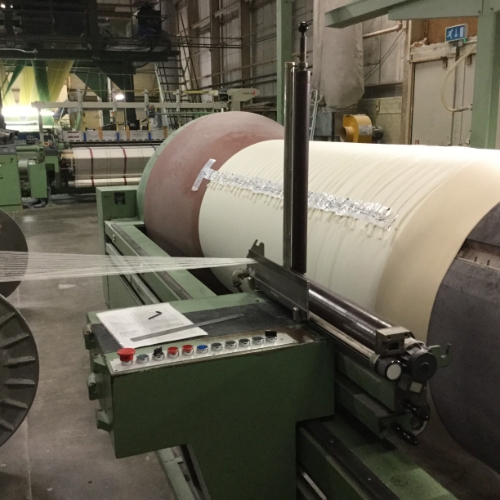
Looms still need fingers. Setting a warp and tying-in is a discipline learned over years.
Sustainability
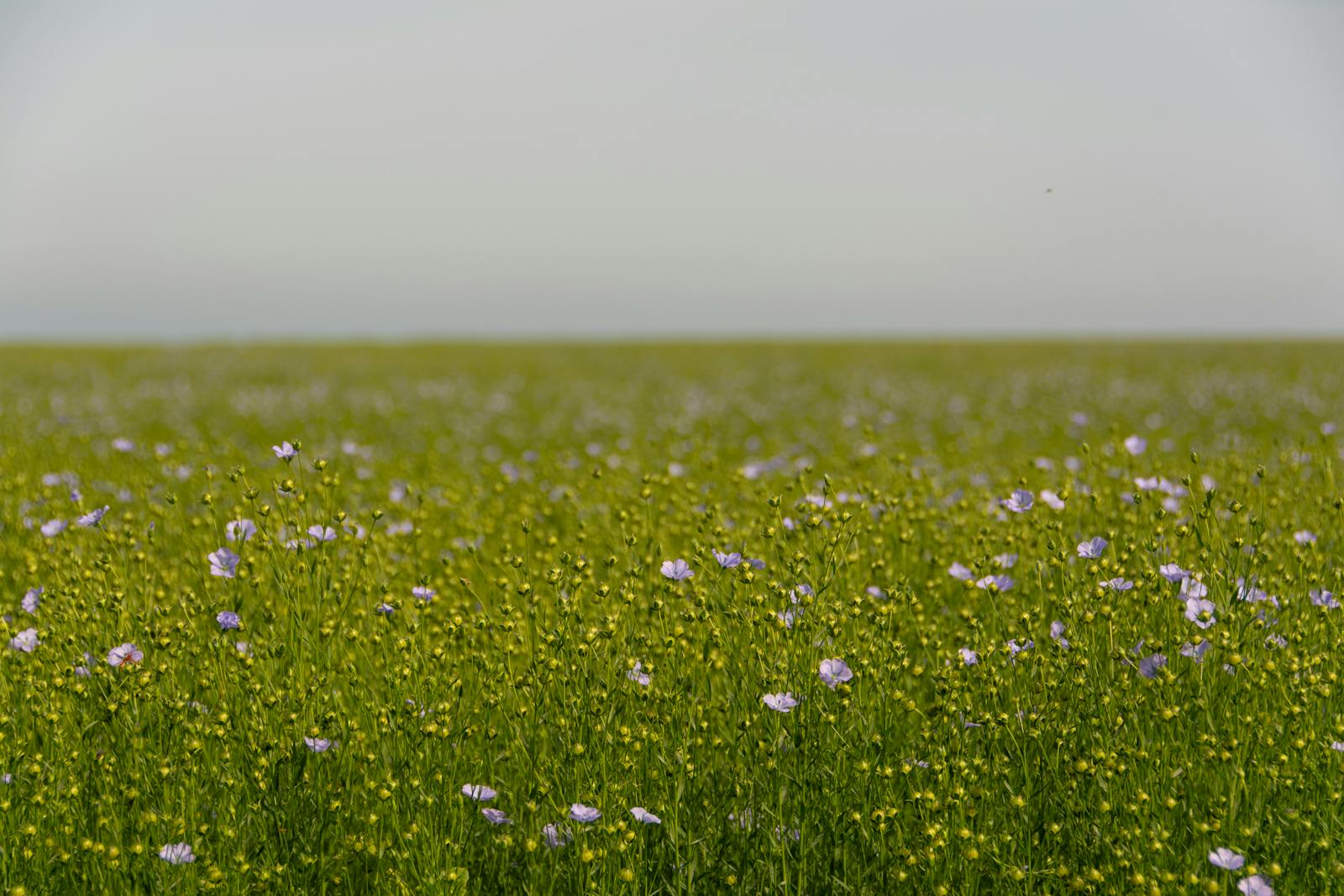
Our cloth begins as a flax flower in a quiet European field and ends in your studio — sustainable, naturally-fibred, and crafted with the lightest possible touch.
Our promise
Flax thrives without irrigation, demands very little fertiliser, and biodegrades back into the soil at the end of a long, useful life. A linen shirt holds carbon, ages beautifully, and asks nothing of the land it came from.
We provide creatives — fashion designers, interior designers, and film and theatre productions — with quality fabrics that are sustainable, natural and ethical. Every choice we make at the loom reflects a commitment to nature, fairness and limitless imagination.
Four pillars
Fabrics that honour the earth — natural fibres, low-impact dyes and zero-waste finishing wherever possible.
No design too bold, no deadline too tight. Our agile Irish workshop turns imagination into tangible textiles.
From farm to fabric, every step prioritises fair wages, safe working conditions and traceable sourcing.
Low minimums and fast turnaround empower indie designers and major studios alike to create responsibly.
From flax to fabric
Step 01
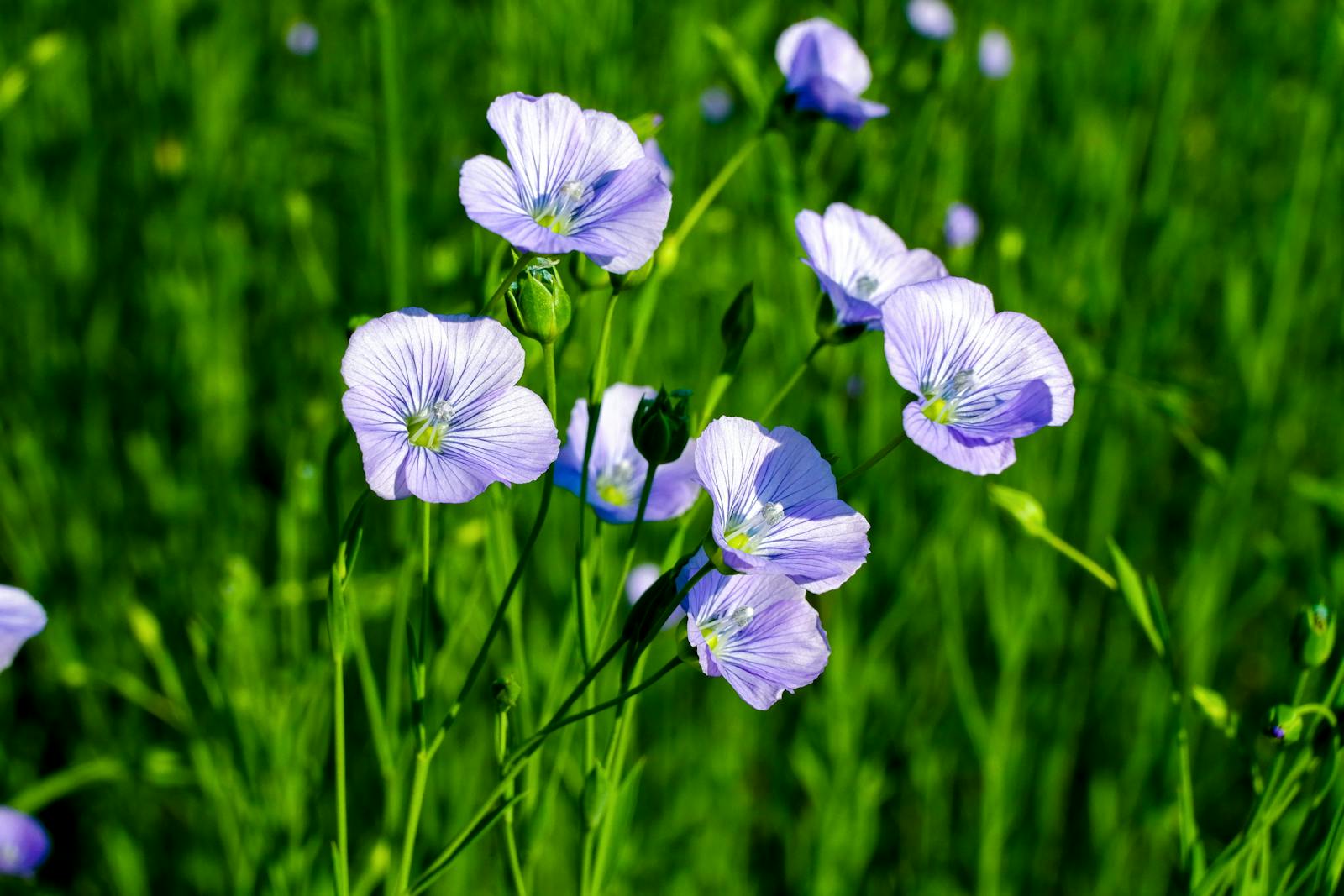
Our linen begins as Linum usitatissimum — a hardy crop that blooms blue at sunrise and is harvested by July. It needs no irrigation and almost no pesticide.
Step 02
After harvest, flax stalks are dew-retted, broken and combed to release the long bast fibres. Every part of the plant — seeds, shives, tow — finds a use.
Step 03
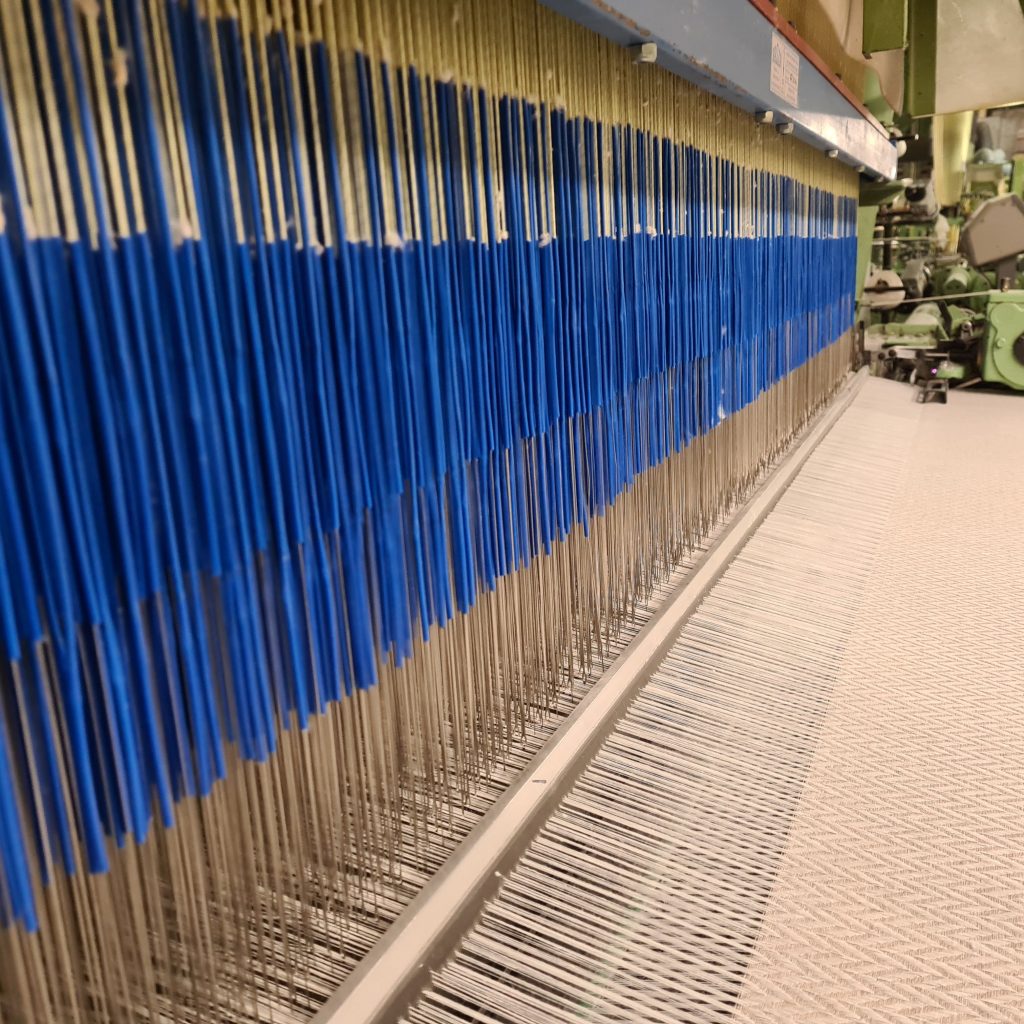
Yarn arrives at our County Down mill and is wound onto warps up to three metres wide. Jacquards, plains and special weaves all run on the same floor.
Step 04
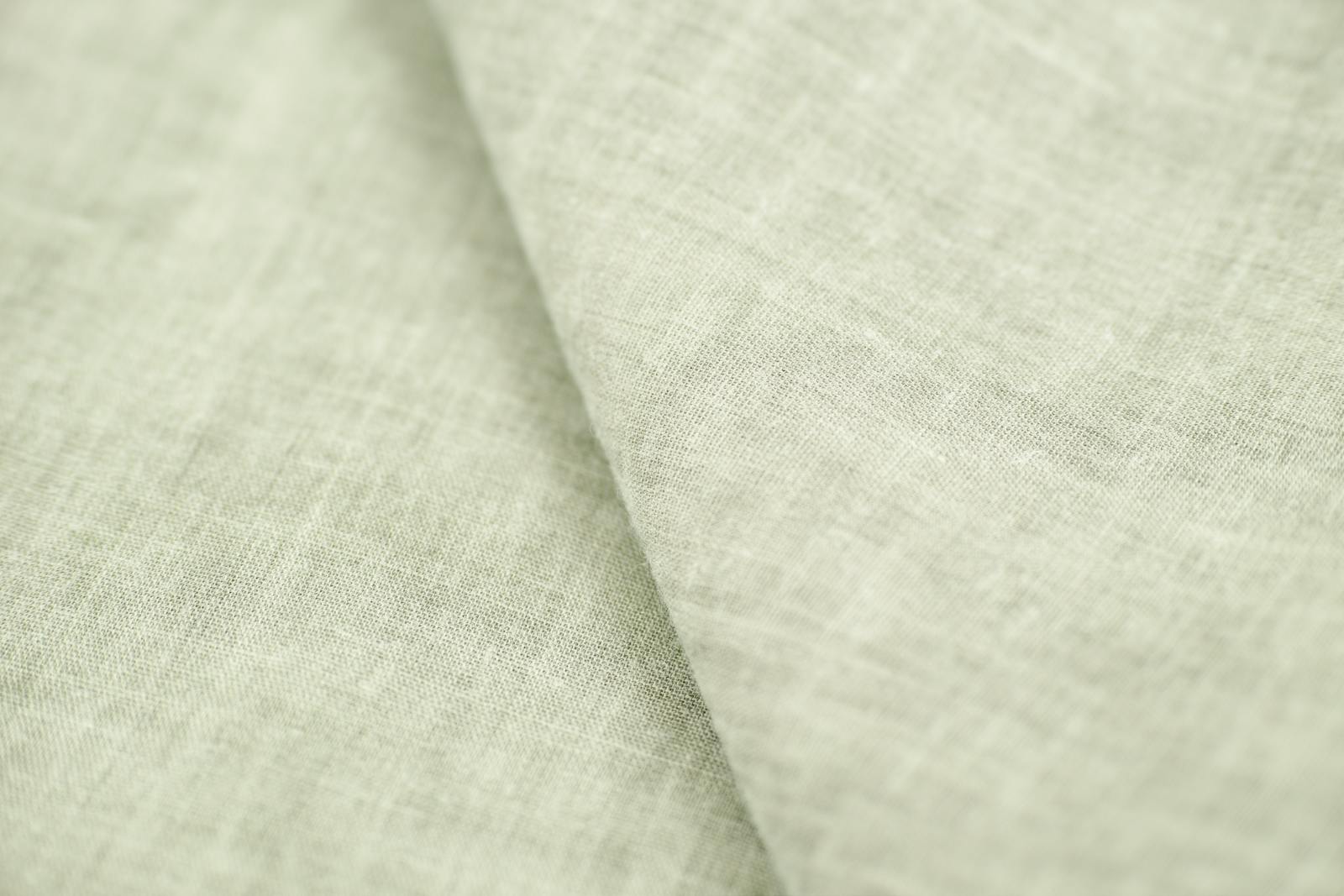
Our in-house laundry softens, pre-shrinks and tunes the hand of every cloth in soft County Down water, then finishes it by hand. The famous "W" suffix on a fabric code means it has been through this process.
Numbers that matter
0
Litres of irrigation per kilo of flax. Rain is enough.
12 m
Minimum trial run. Less waste, more iteration.
55+
Years weaving in Banbridge — heritage built on care.
100%
Of our cloth begins as a natural fibre.
Rooted in Ireland
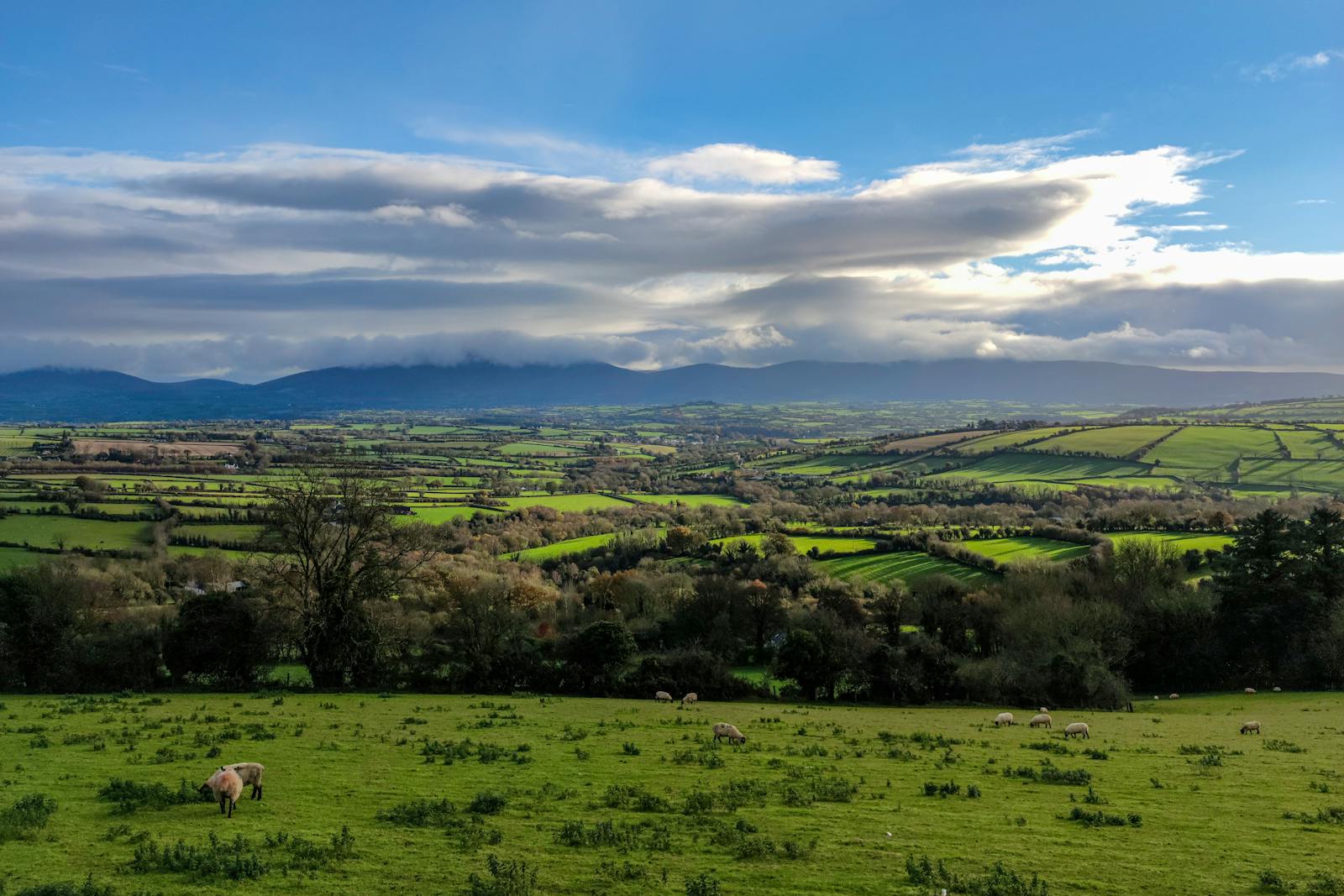
Banbridge sits in the soft hill country of County Down. The same damp Atlantic air that keeps Ireland green has, for centuries, been the secret to a fine linen finish — moisture keeps the fibres supple as they pass through the loom.
Working here means working with the rhythm of the place. Local hands, local knowledge, and a supply chain we can stand behind every metre of.
Craft
Looms still need fingers. Setting a warp and tying-in is a discipline learned over years.
Plain and jacquard looms run side by side — up to three metres wide, the broadest in Ireland.
A final wash-finish softens, drapes and pre-shrinks every metre in soft County Down water, then we finish the cloth by hand.
Our manifesto
We revolutionise the creative industries by becoming the global benchmark for ethical craftsmanship — where sustainability and bespoke design coexist seamlessly.