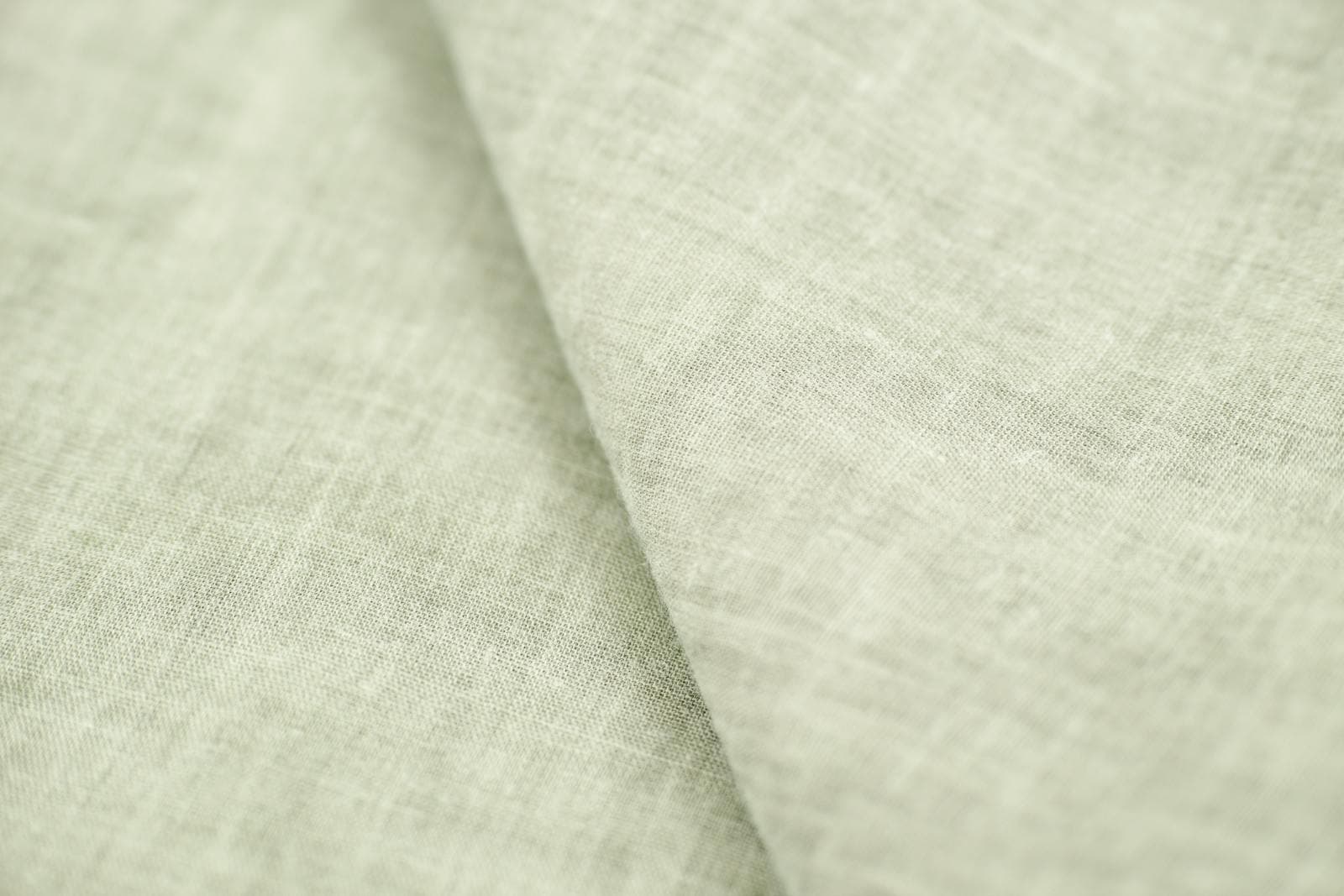
Irish Linen Fabrics
Real linen.
Really Irish.
For over 55 years John England has woven 100% pure Irish linen and linen-blend fabrics for fashion, interiors and film — on our own looms in Banbridge, Northern Ireland.
What is Irish linen?
A fibre with provenance.
Linen is the cloth woven from the long bast fibres of the cultivated flax plant, Linum usitatissimum. Flax has been spun and woven in Ireland for over a thousand years — but in modern usage, “Irish linen” means something specific: cloth that has been made in Ireland, on Irish looms, by companies like ours.
The strength of the Irish linen brand is reflected in the number of fakes that try to use the name. All linen sold in Ireland is not Irish linen. To carry the name, it must be woven here.
“Irish linen is a brand with a history that says where it comes from.”
What makes a linen fabric Irish
Field to fabric, kept honest at every step.
01
Grown in Europe
The flax in our linen is grown along the "European flax belt" — Northern France, Belgium and the Netherlands. The wet ocean climate, silty soil and dew-retting tradition make this strip the highest-quality flax-growing region in the world. We are a member of CELC, the European Confederation of Flax and Hemp.
02
Woven in Banbridge
The yarn arrives at our County Down mill and is wound onto warps up to three metres wide — the broadest jacquard and plain looms in Ireland. To carry the name "Irish linen", the cloth must be made in Ireland. We have been weaving on this site since 1969.
03
Washed and then finished by hand
After it leaves the loom, the cloth is wash-finished in our own laundry in soft County Down water — softening, draping and pre-shrinking it — and then finished by hand. The "W" suffix on a fabric code means it has been through this process.
04
Traceable, certified, named
We hold both the Irish Linen Guild membership AND the Masters of Linen® mark. The combination matters: Masters of Linen® requires the cloth to be woven in Europe (Ireland qualifies); Guild membership alone does not. Holding both is your strongest assurance that the cloth was actually woven here.
The cloth itself
Why designers keep coming back to linen.
Linen is one of the oldest cultivated fibres on earth — and one of the very few that modern science has not been able to improve on. These properties are intrinsic to the flax fibre. They aren’t a finish. They don’t wash out.
Breathable
The best airflow of any natural fibre. Linen wicks moisture and dries fast — comfortable in any climate.
Thermoregulating
Cool in summer, insulating in winter. The same length of cloth can wear both seasons.
Hypoallergenic
Patch tests show no allergic reaction. The historic textile of the Irish kitchen for a reason.
Antibacterial
Cellulosic linen significantly outperforms synthetics in standard antimicrobial tests.
Stronger when wet
Linen's tensile strength actually increases by 20% when damp — the only natural fibre that does this.
Biodegradable
Pure linen returns to the soil in months, not centuries. No microplastic, no chemical residue.
Long-staple, low-pill
Our European flax has some of the longest staples on earth. Long fibres pill far less than short ones.
Improves with age
Every wash softens linen further — drape, hand and lustre all build over time, not deteriorate.
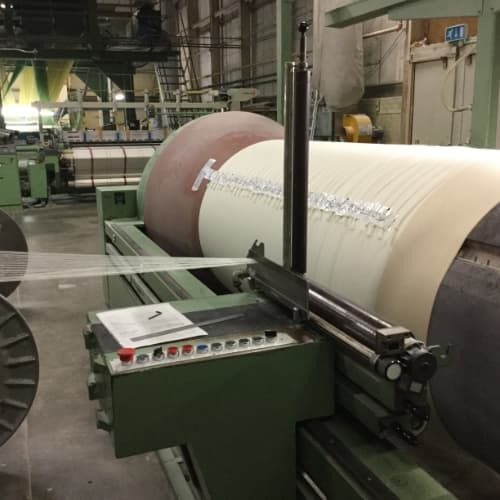
Woven in Banbridge
The broadest looms
in Ireland.
Plain and jacquard looms run side by side at our Banbridge mill — up to three metres wide. Wide-format means fewer seams, larger pattern repeats, and apparel or interiors cloth that lays flat and finishes cleanly.
Behind the looms is our own laundry, where we wash-finish every metre in soft County Down water — softening, draping and pre-shrinking it — and then finish by hand.
The collections
297 designs. 499 colourways. Stocked.
Irish Linen
Our flagship 100% pure Irish linen — plain weaves, herringbones, twills and basket-weaves in a hundred colourways. The benchmark cloth.
Browse the range →
Wool & Linen
Lambs-wool weft on a linen warp — heavier, warmer, with a sculptural hand. Built for winter coats, throws, jacquard cushions.
Browse the range →
Jacquard & Damask
Our most intricate weaves — every design unique. Story-led patterns that have to be seen and held to be understood.
Browse the range →
Plain Colours
Stocked plain-dyed linens in our standard pantone palette — soft, sustainable, ready to ship from twelve metres.
Browse the range →
Bespoke commissions
Can’t find it in the catalogue?
We’ll weave it for you.
We take bespoke commissions on our own looms with a minimum order of just twelve metres. Custom weight, weave or width — woven from any of the colours we hold in yarn stock. Dyeing itself is done at our partner mills, not in-house. Lead times are short and the studio team gets involved from the first sketch.
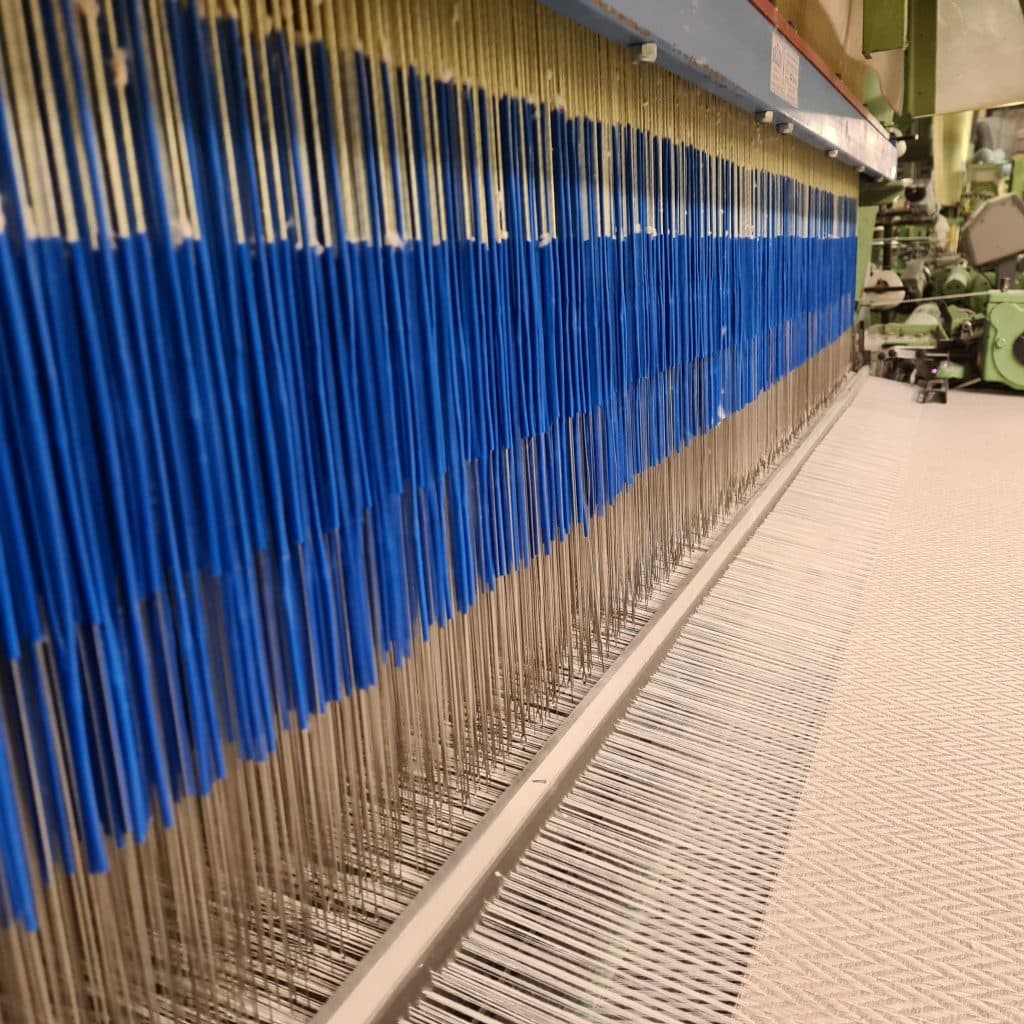
Caring for linen fabric
It only gets better with age.
One of linen’s best-kept secrets: properly cared for, it improves for decades. Generations of household linens are passed down for a reason.
Washing
Linen becomes more supple with every wash. White linen tolerates up to 95 °C; colours go in at 40–60 °C on a normal programme. Always check the care label.
Whitening
Use detergents and whiteners with an oxygenated base. Avoid chlorine bleaches — these can yellow linen if not rinsed straight away.
Drying
After a moderate spin, hang to dry, lay flat (knits) or use the tumble dryer per the label. Soft-washed linen does not need ironing.
Ironing
If needed, iron while still damp on the reverse side. Pure linen tolerates a very high temperature — but always test on a corner first with dark colours.
Working with John England
Short supply lines.
Sustainable cloth.
A name you can stand behind.
Whether you need twelve metres for a one-off costume or twelve hundred for a global rollout — the same looms, the same hands, and the same standard of finishing apply.